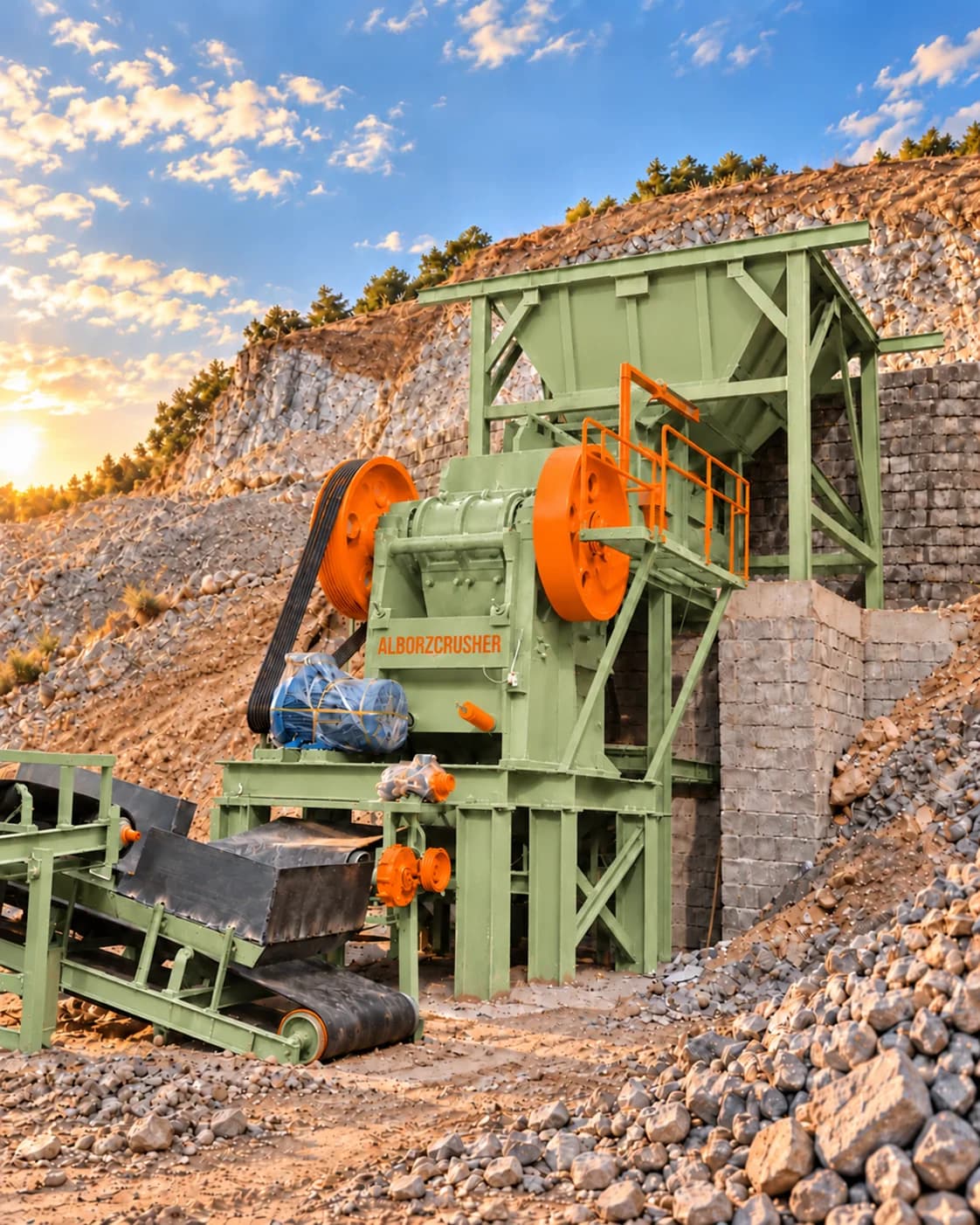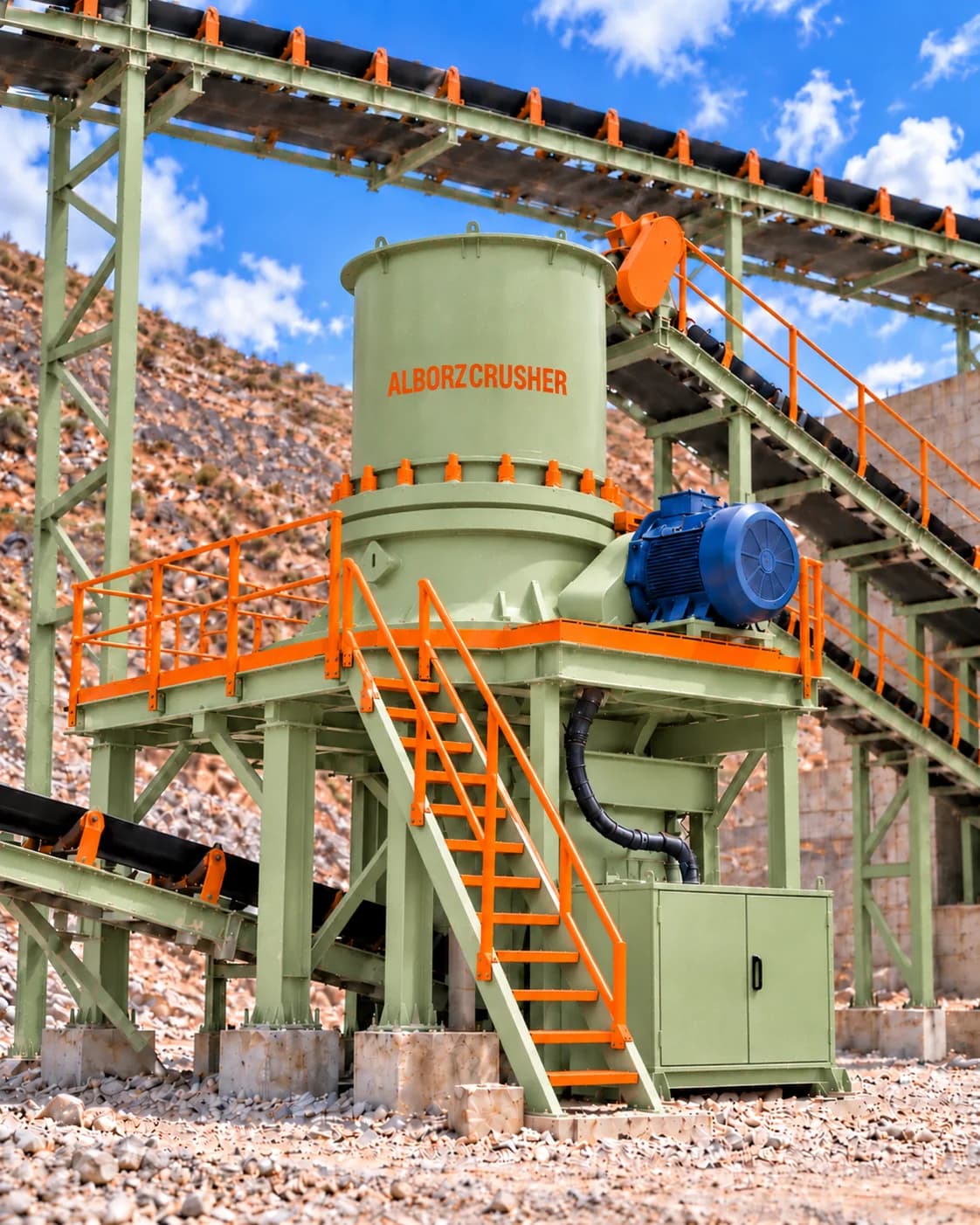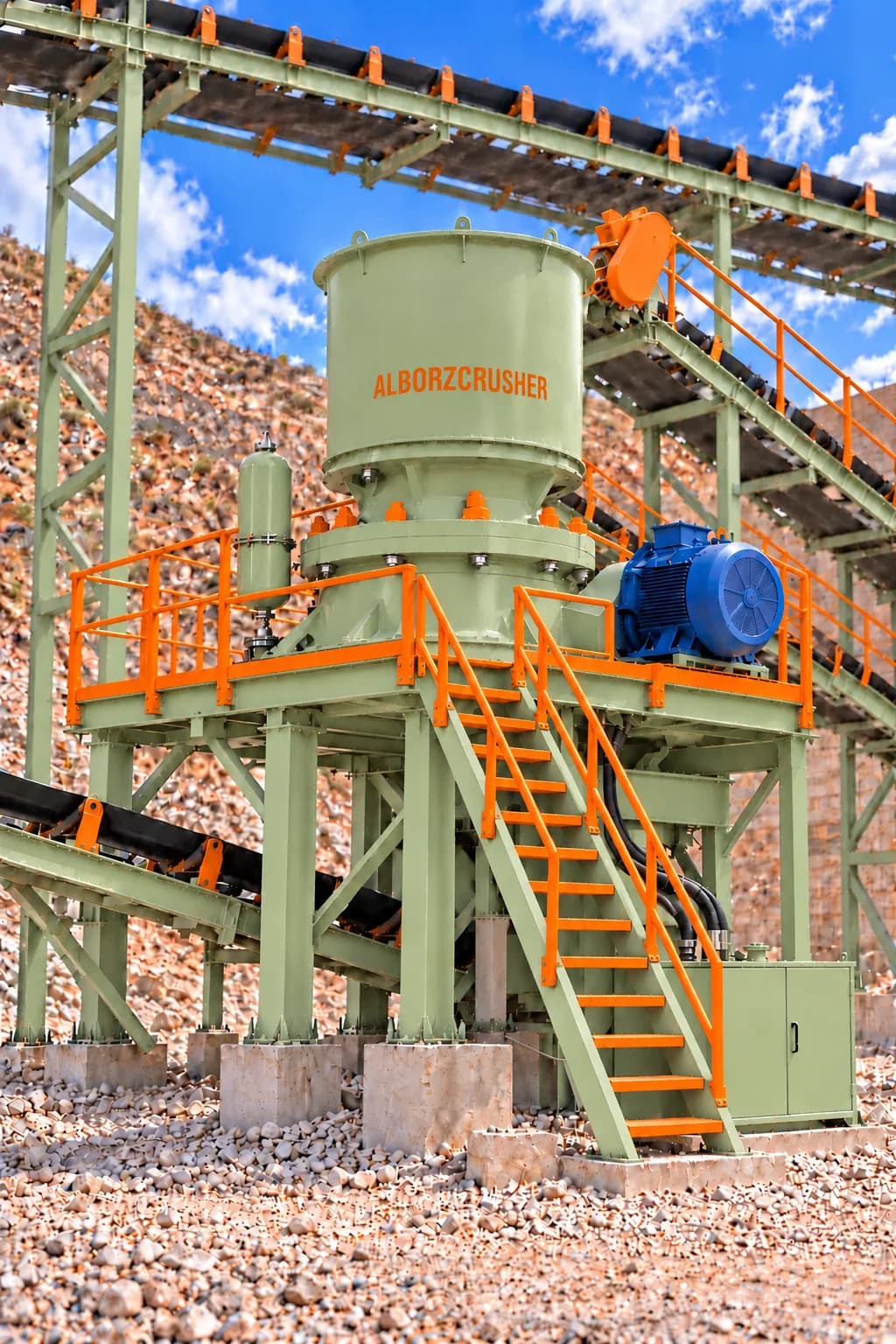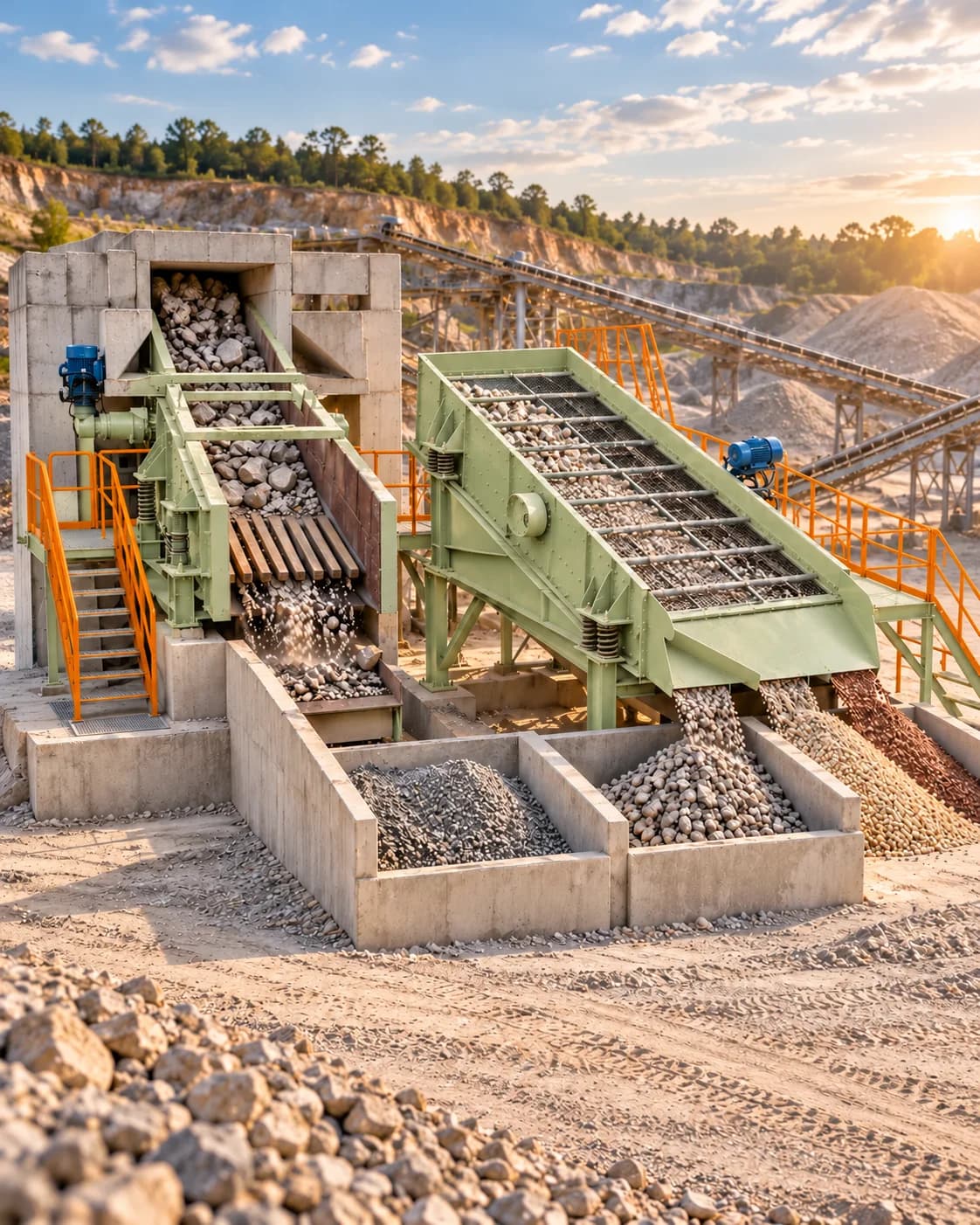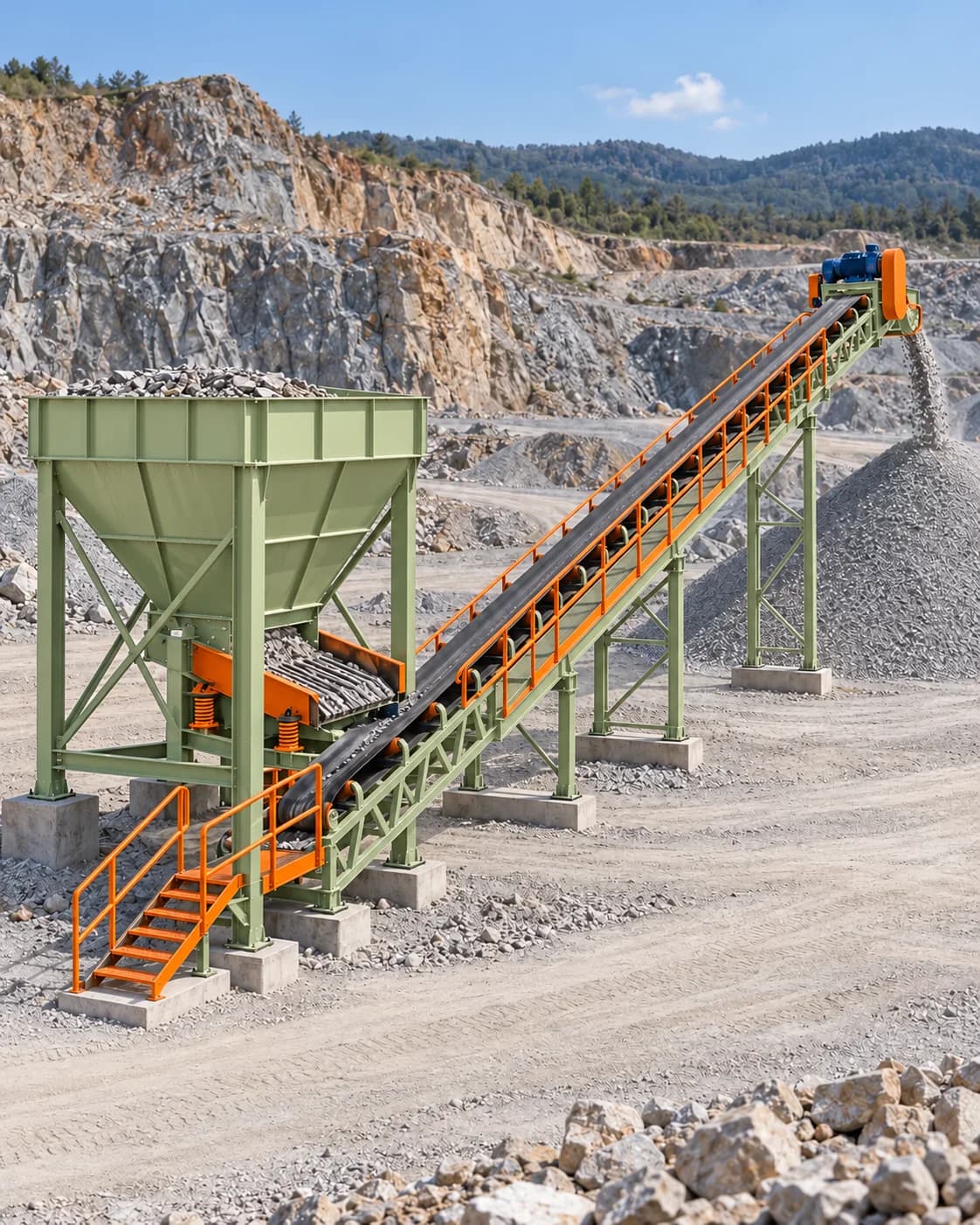


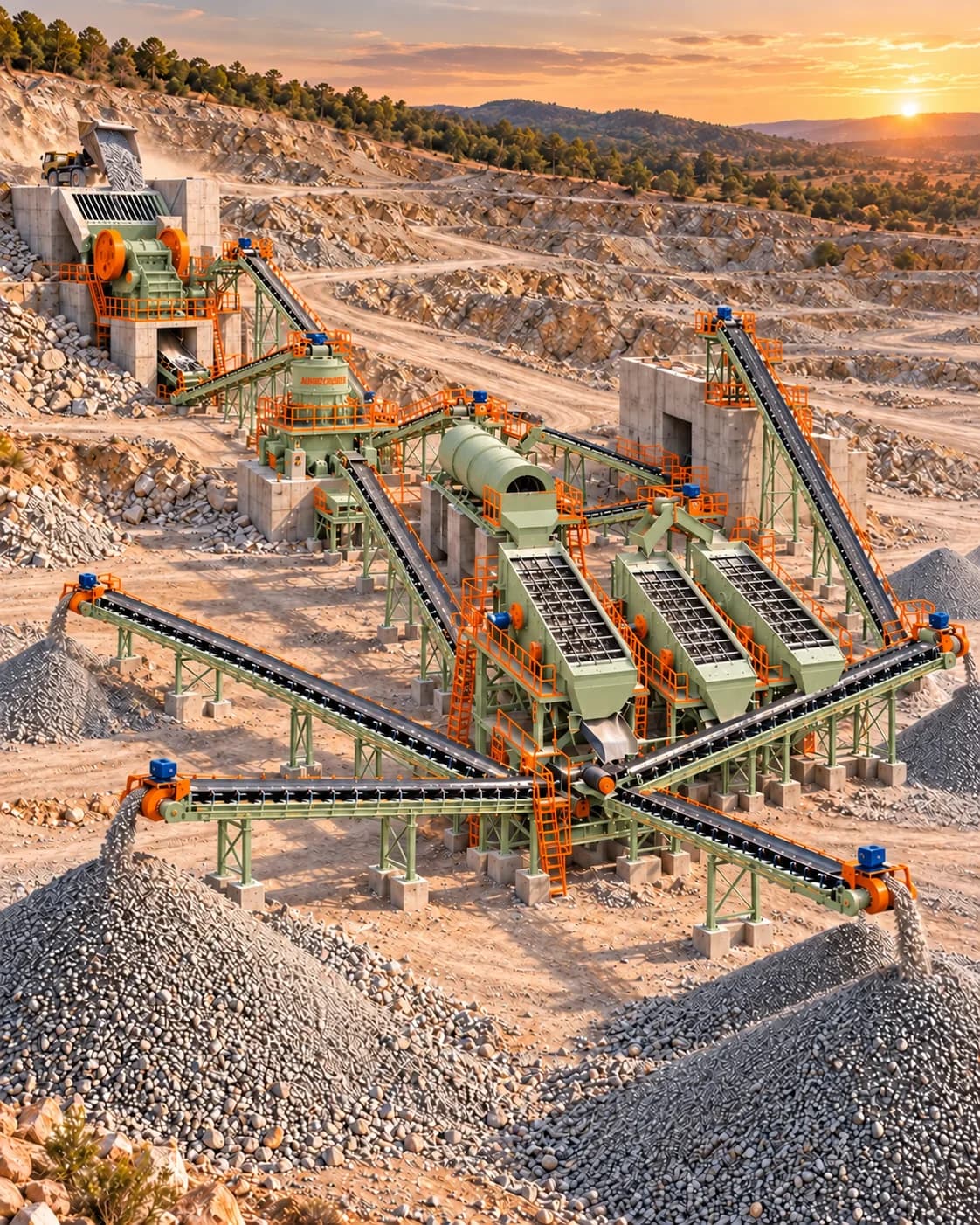
A crushing plant brings feeding, size reduction and screening into one production line. The jaw crusher takes the coarse feed; the following stages reduce and separate it into finished fractions. A steady feed and a balanced return circuit help the machines work together.
01
Crushing stages
Primary crushing prepares the run-of-mine material for the rest of the line. A jaw crusher is commonly used at this stage. Cone crushers provide further reduction, while impact crushers are considered where the rock and required product suit impact crushing. The receiving opening and discharge setting must match the material passing between stages.
- Select the first crusher for the largest feed pieces.
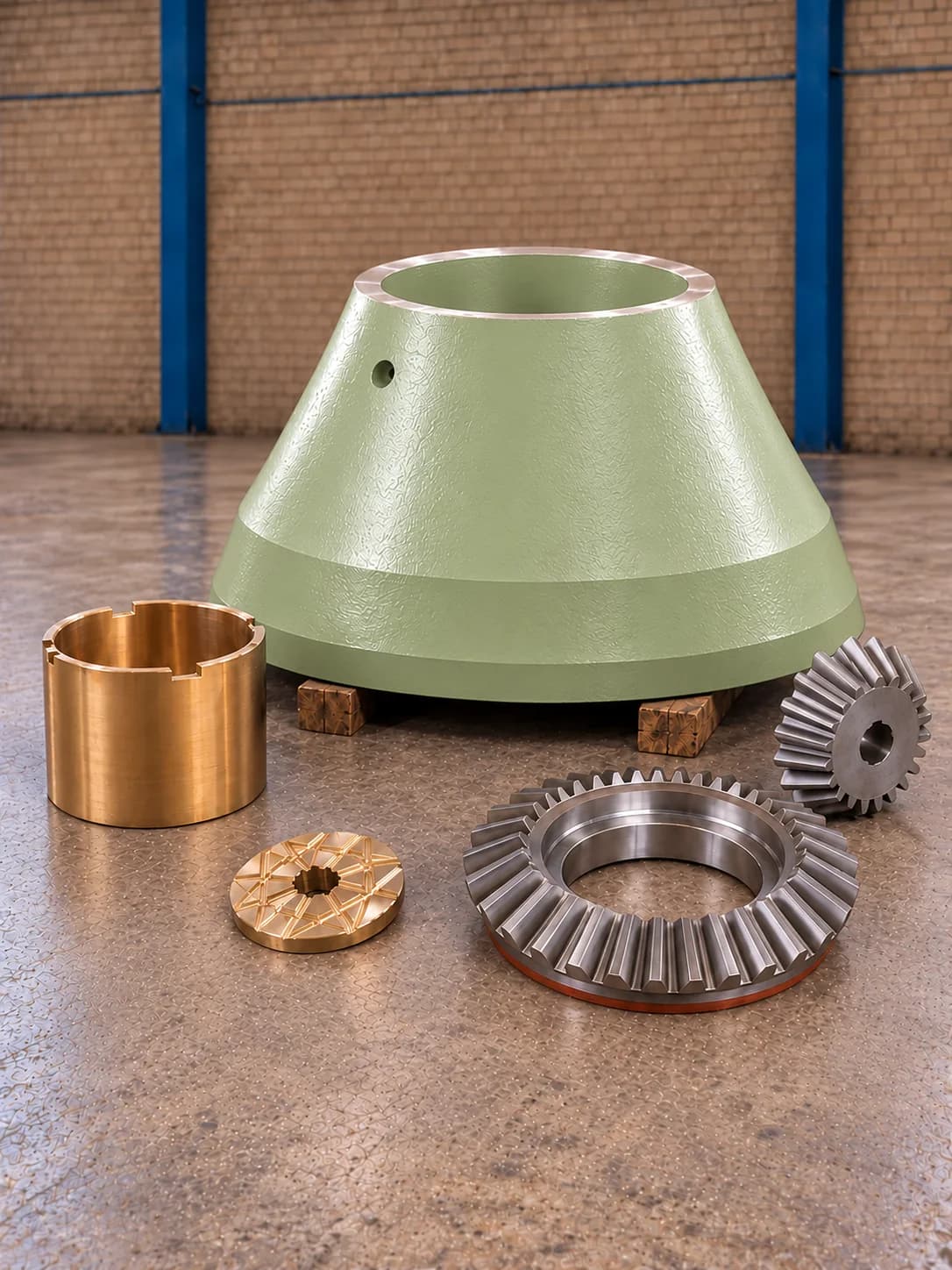
- Match the crushing chamber and wear parts to the rock and required product.
02
Vibrating screens and product grading
Screen decks separate the crushed material through selected mesh openings. The required product sizes determine the deck arrangement. Oversize material can be conveyed back for another crushing pass; this circulating load must be included when sizing the screen, crushers and conveyors.
- Check the feed grading and moisture when selecting screen area.
- Provide access for inspecting and replacing screen mesh.
03
Plant arrangement and maintenance
The layout establishes how material moves from the receiving hopper to the product stockpiles. Conveyor routes, transfer chutes and discharge heights must fit the site. Space around motors, bearings and wear parts is needed for inspection, lubrication and component replacement.
- Allow for foundations, access roads and lifting equipment.
- When extending a line, check the capacity of the equipment that will remain in service.
Common questions
What determines the crushing arrangement?
The rock properties, largest feed size and required finished products determine the number and type of crushing stages. Screening and return loads are then matched to that arrangement.
Why return oversize material to the crusher?
Particles larger than the selected screen opening need another crushing pass. Returning this fraction produces the required grading, but also increases the load carried by the machines and conveyors.
Can equipment be added to an existing line?
Yes. The existing feed, screening and conveying capacities must be checked so the added machine can operate within a balanced line.