

Material feeding
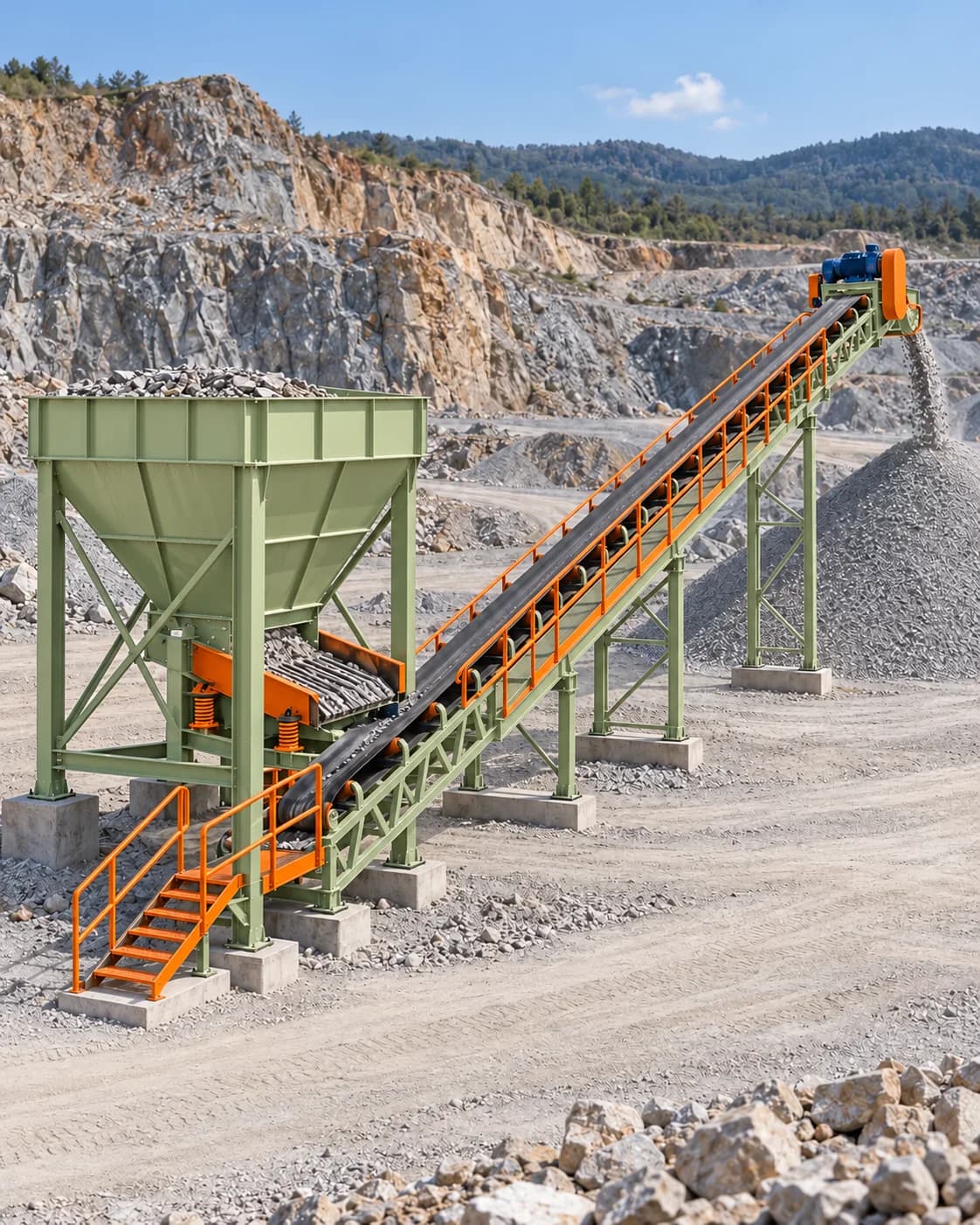
Receiving hoppers and feeders maintain a controlled flow to the primary crusher. Grizzly bars separate fine material before it enters the crushing chamber.
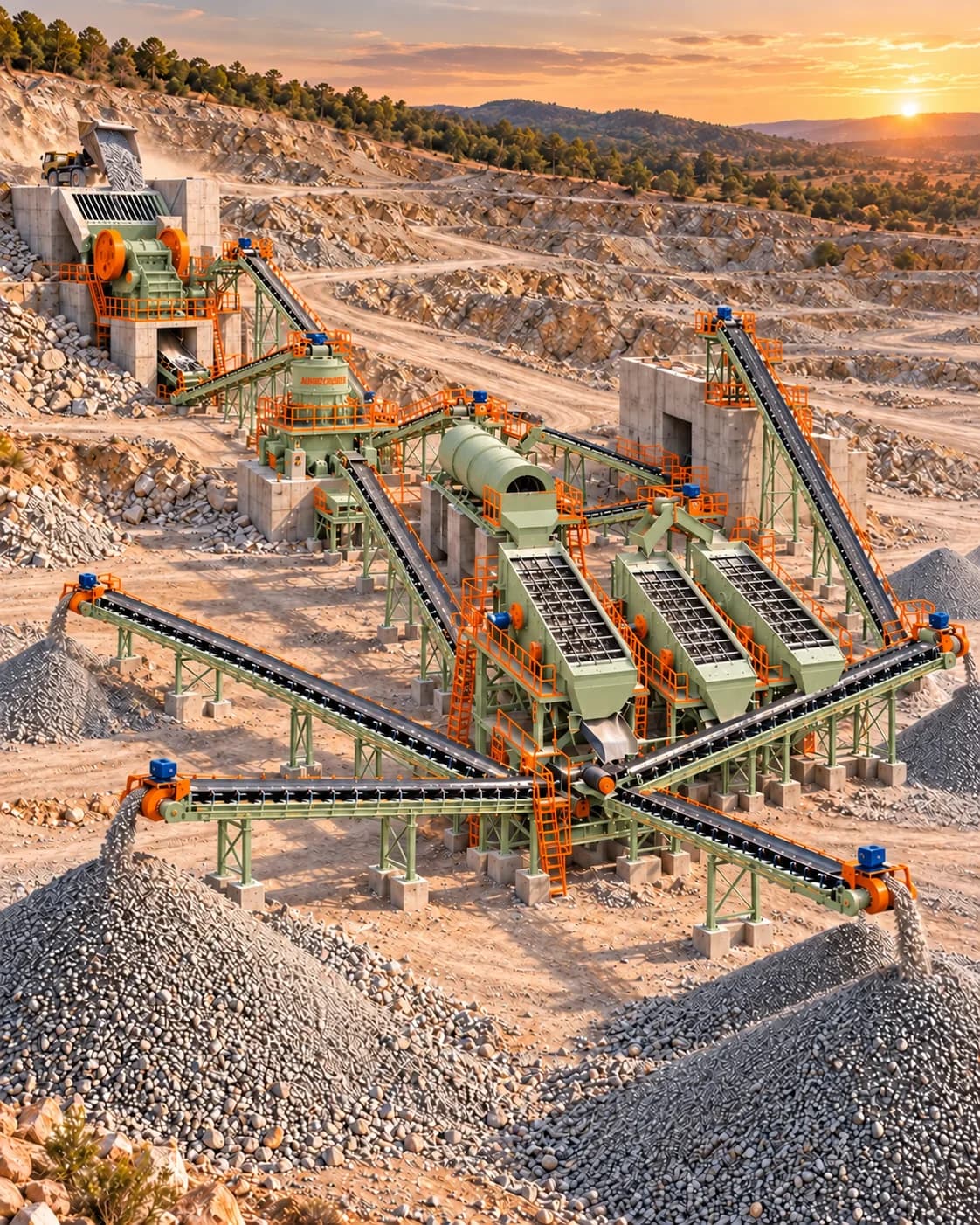
Hoppers, feeders, crushers, vibrating screens and belt conveyors form the main stages of a crushing plant. Sand washing, dewatering and water recovery equipment complete a wet-processing line.
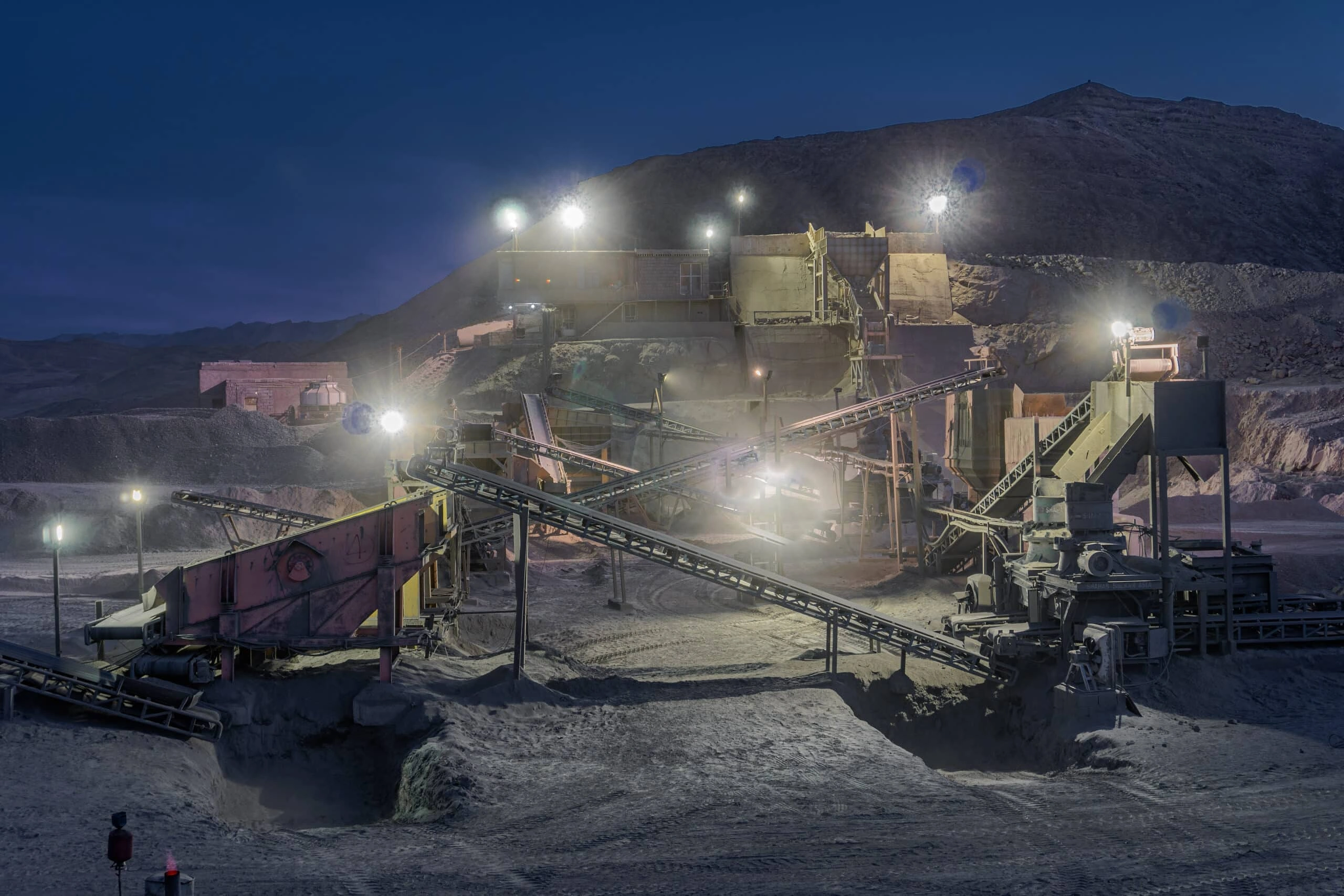
Collaboration with Rahbaran Foolad Isfahan mining plant
Receiving hoppers and feeders maintain a controlled flow to the primary crusher. Grizzly bars separate fine material before it enters the crushing chamber.
Jaw crushers carry out primary reduction. Cone and impact crushers are used in later stages according to the rock properties and required product.
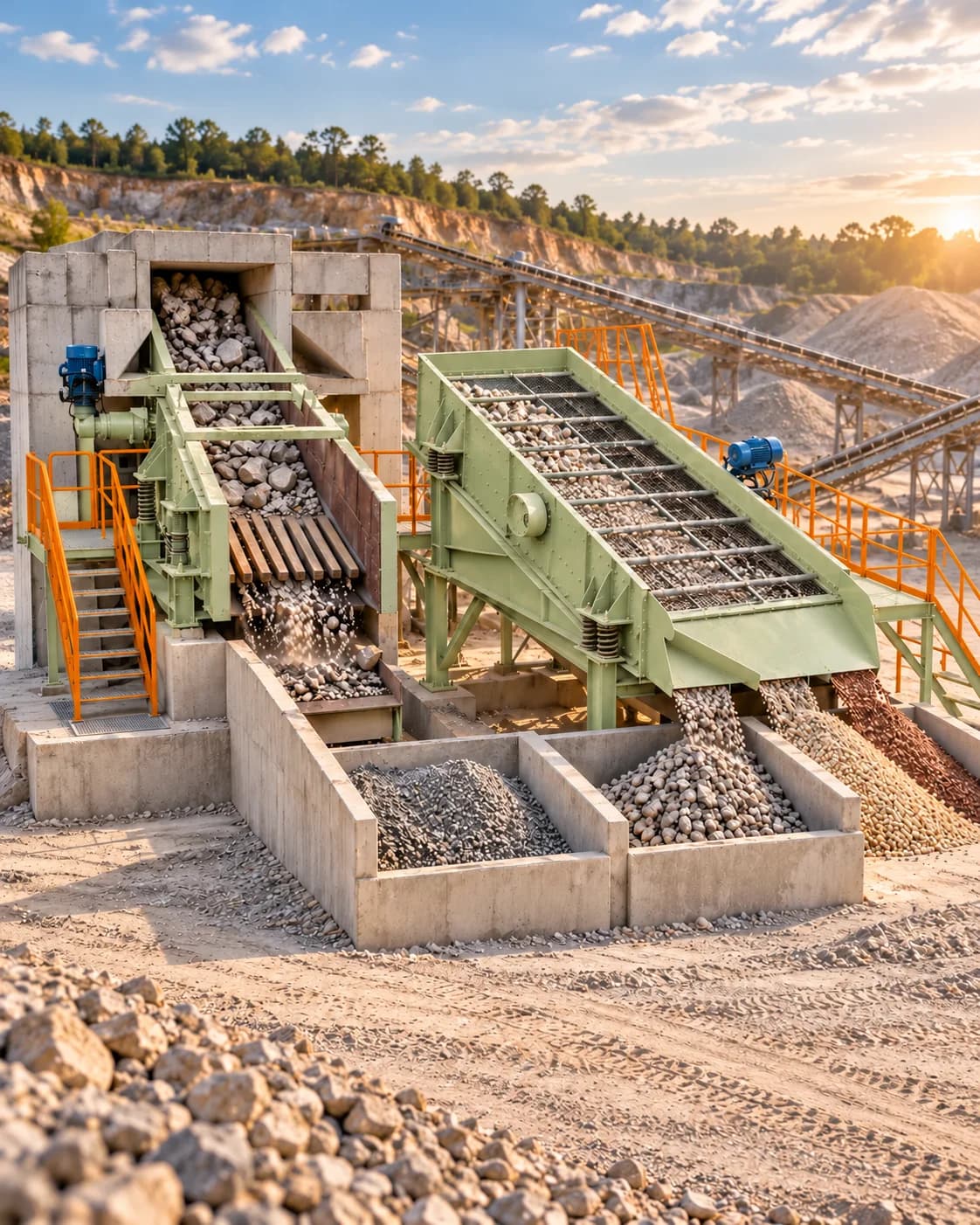
Vibrating screens divide the crushed material into specified size fractions. In a closed circuit, oversize returns to the crusher.
Sand washers remove unwanted fines; dewatering screens drain the washed sand. Belt conveyors transfer material between machines and to stockpiles.
The arrangement of each line is matched to the feed size, rock properties, required production capacity and product grading. Site space, conveyor lengths and access for maintenance are considered in the layout.
Other plant equipmentProcessing lines
Feeding, crushing, screening, washing and conveying in a mineral-processing line.
Crushers, vibrating screens and conveyors arranged for the required feed and aggregate sizes.
View guideSand washers, hydrocyclones, dewatering screens and thickeners for the wet section of an aggregate plant.
View guideReceiving hoppers, grizzly feeders and belt conveyors for a controlled flow through the plant.
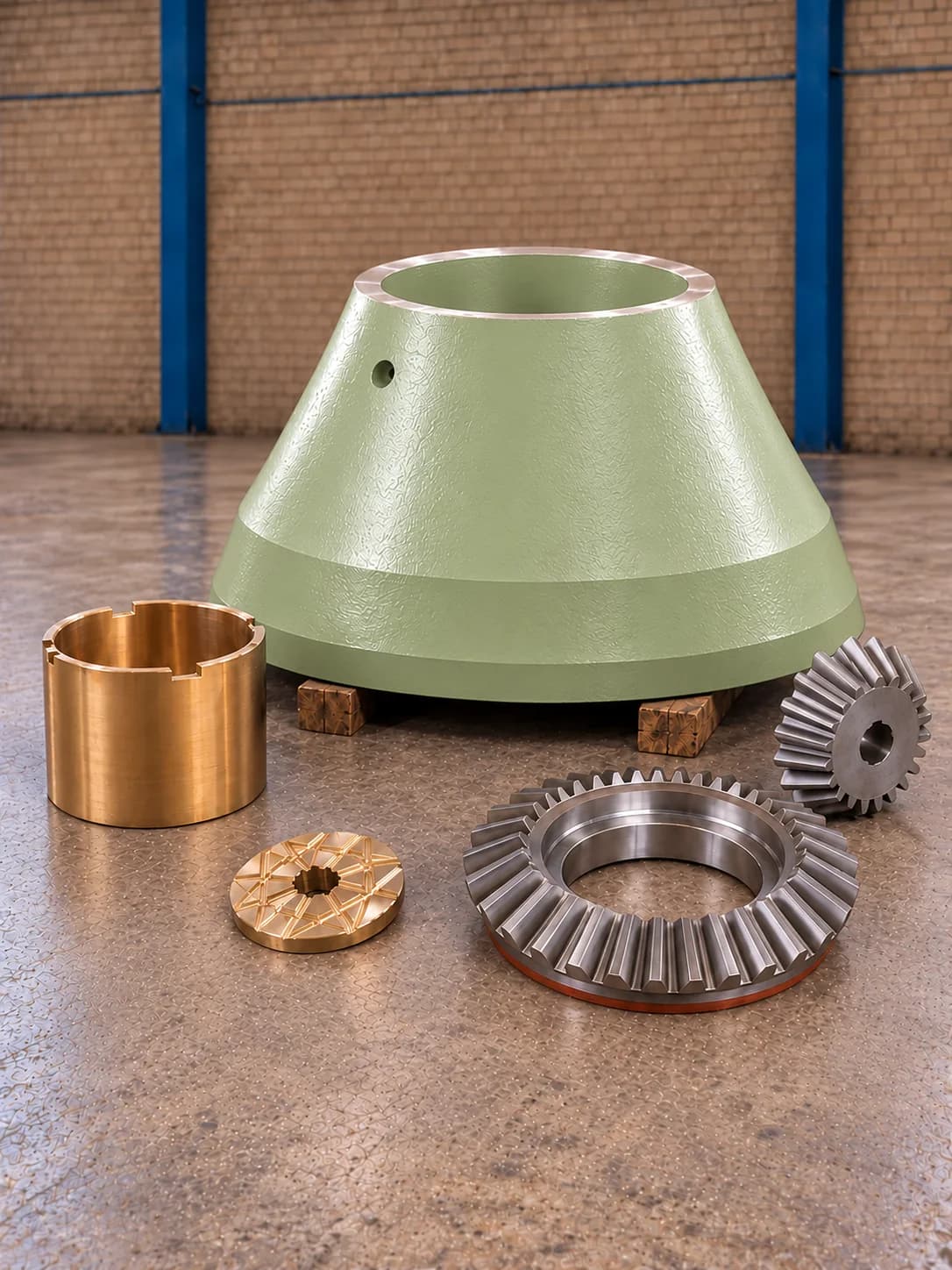
View guideJaw plates, cone liners, shafts, bushes and drive components for crusher service and repair.
View guideProcessing lines
Compression and impact are the principal ways of reducing rock size. The choice depends on the feed, rock hardness and abrasiveness, and the required product grading.
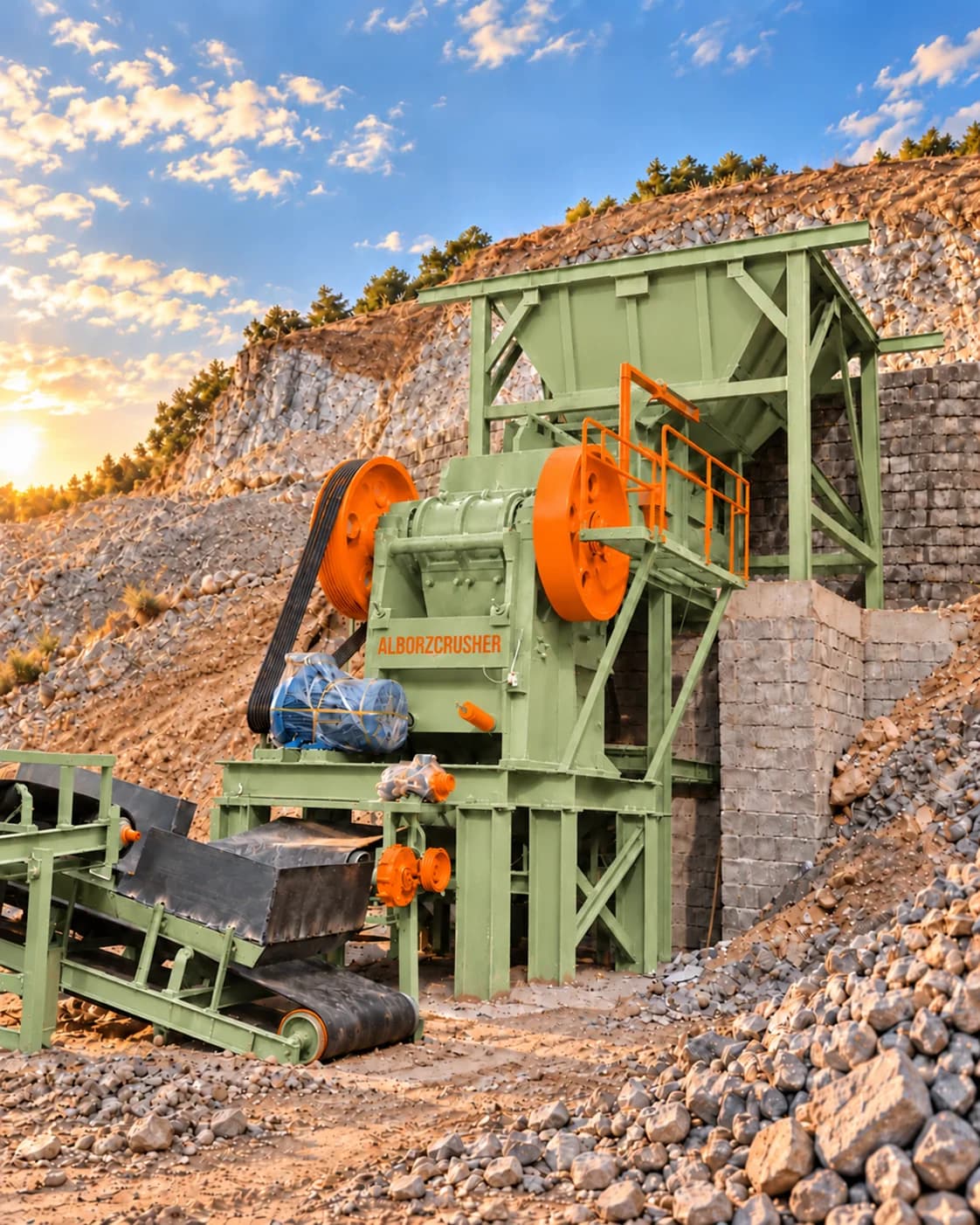
The moving jaw compresses rock against a fixed jaw plate. Jaw crushers are commonly used for the first reduction of coarse feed.
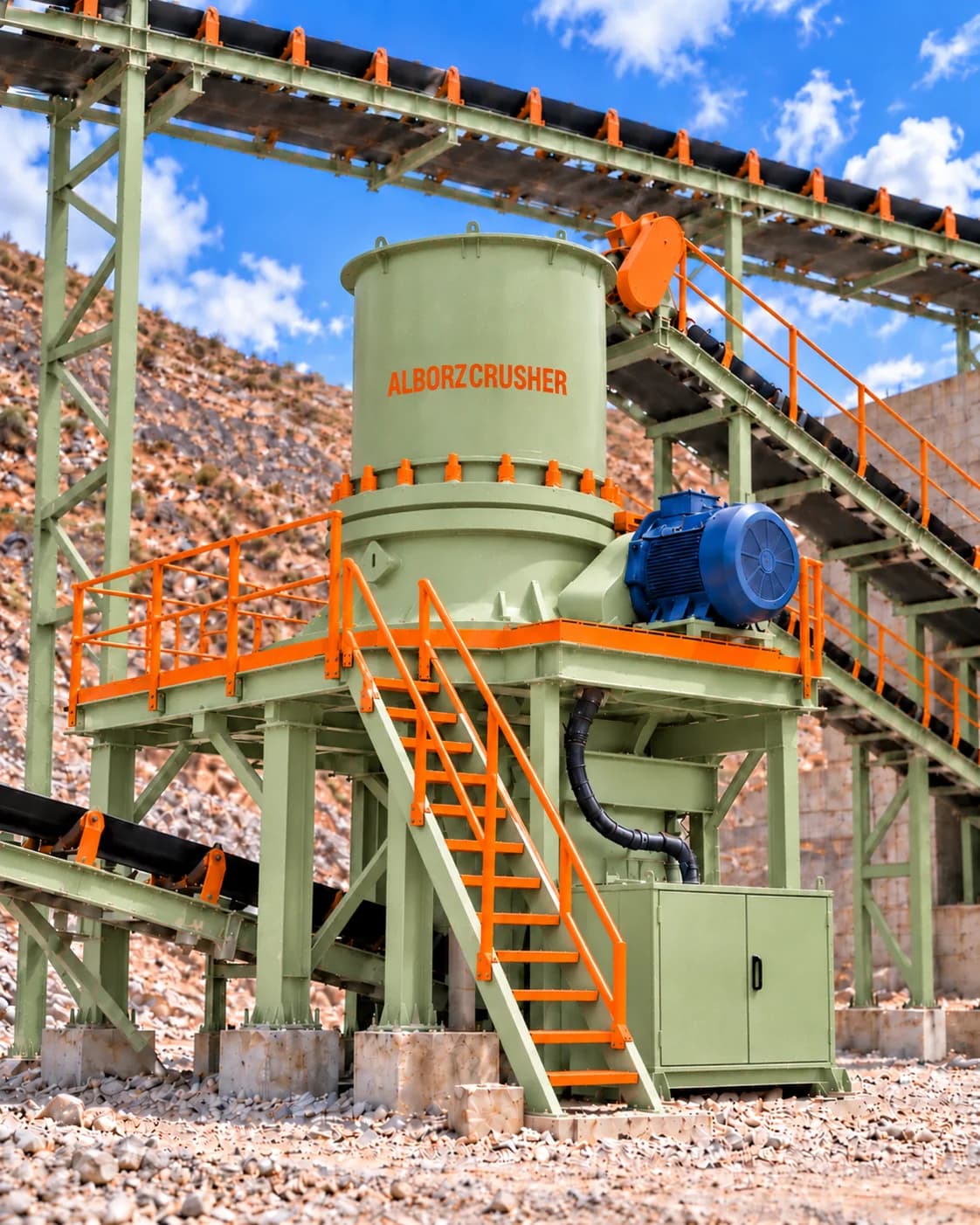
The mantle moves within the concave to compress the feed. Chamber profile and discharge setting determine the crushing duty at secondary or tertiary stages.
Rotor-mounted blow bars strike the feed and direct it against impact surfaces. Rock abrasiveness and the required grading govern the duty and wear-part selection.
A vertical rotor accelerates the feed for impact breakage and particle shaping. Screening separates the finished sand from material needing another pass.