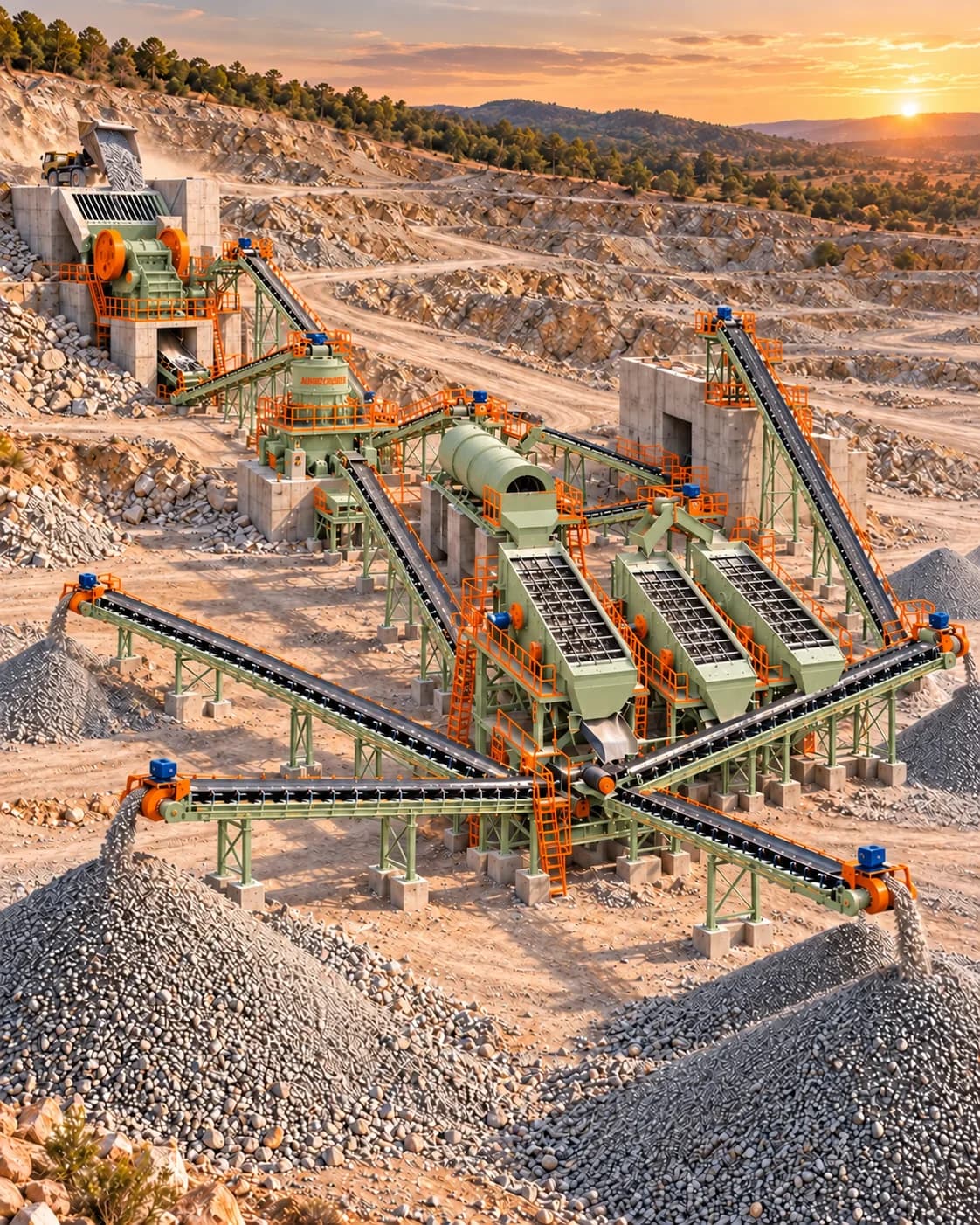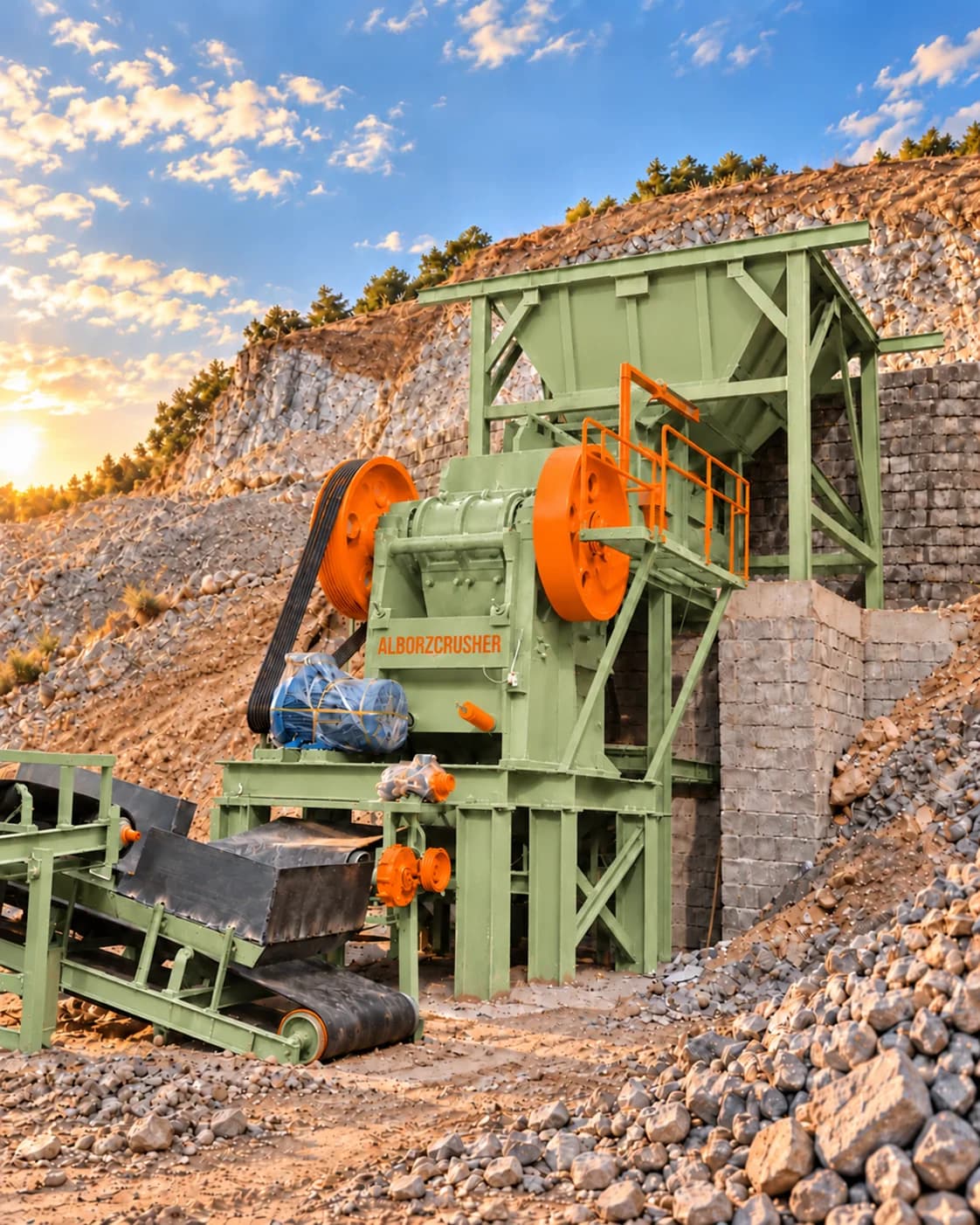


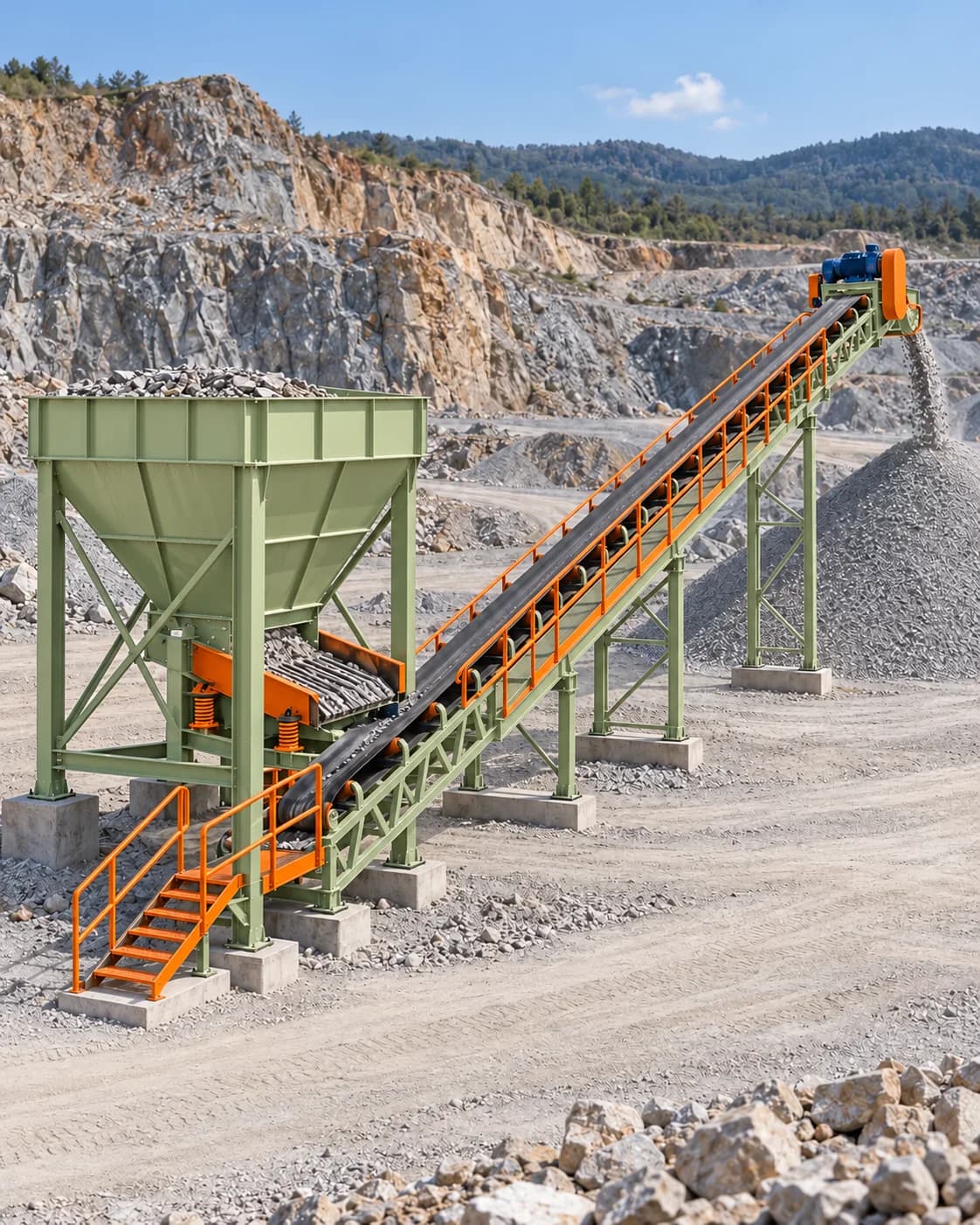
The feeding and conveying system links the machines in a crushing line. Hoppers receive the incoming load, feeders regulate the supply to the crusher, and belt conveyors carry the material between processing stages and to stockpiles. Transfer points and feed rates must be coordinated to prevent build-up and spillage.
01
Hoppers and controlled feeding
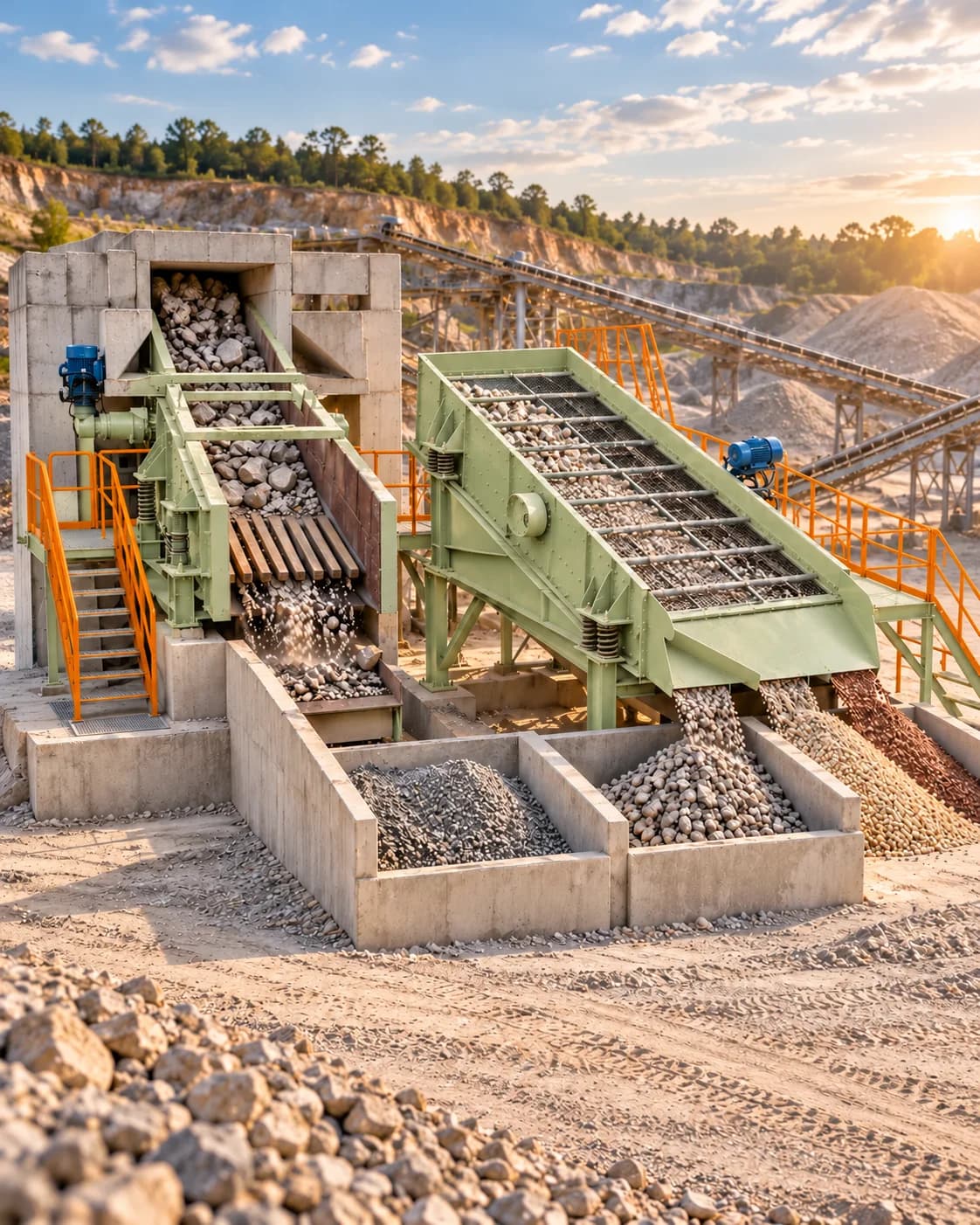
The receiving hopper buffers incoming loads while the feeder delivers material at a controlled rate. A vibrating feeder moves the load across its tray. Grizzly bars separate undersize before the crusher; where the circuit allows, this material bypasses unnecessary crushing.
- Match the hopper opening to the loading method and largest pieces.
- Set the feed rate for the receiving crusher and downstream equipment.
02
Belt conveyors and transfer chutes
Belt width, speed, inclination and material bulk density determine the conveying duty. Idlers support the loaded belt, while the drive and return drums guide its movement. Chutes direct the discharge into the next belt or hopper and limit impact and spillage at transfer points.
- Include circulating material in the conveyor load.
- Confirm conveyor lengths, discharge levels and changes in direction.
03
Drives, bearings and maintenance access
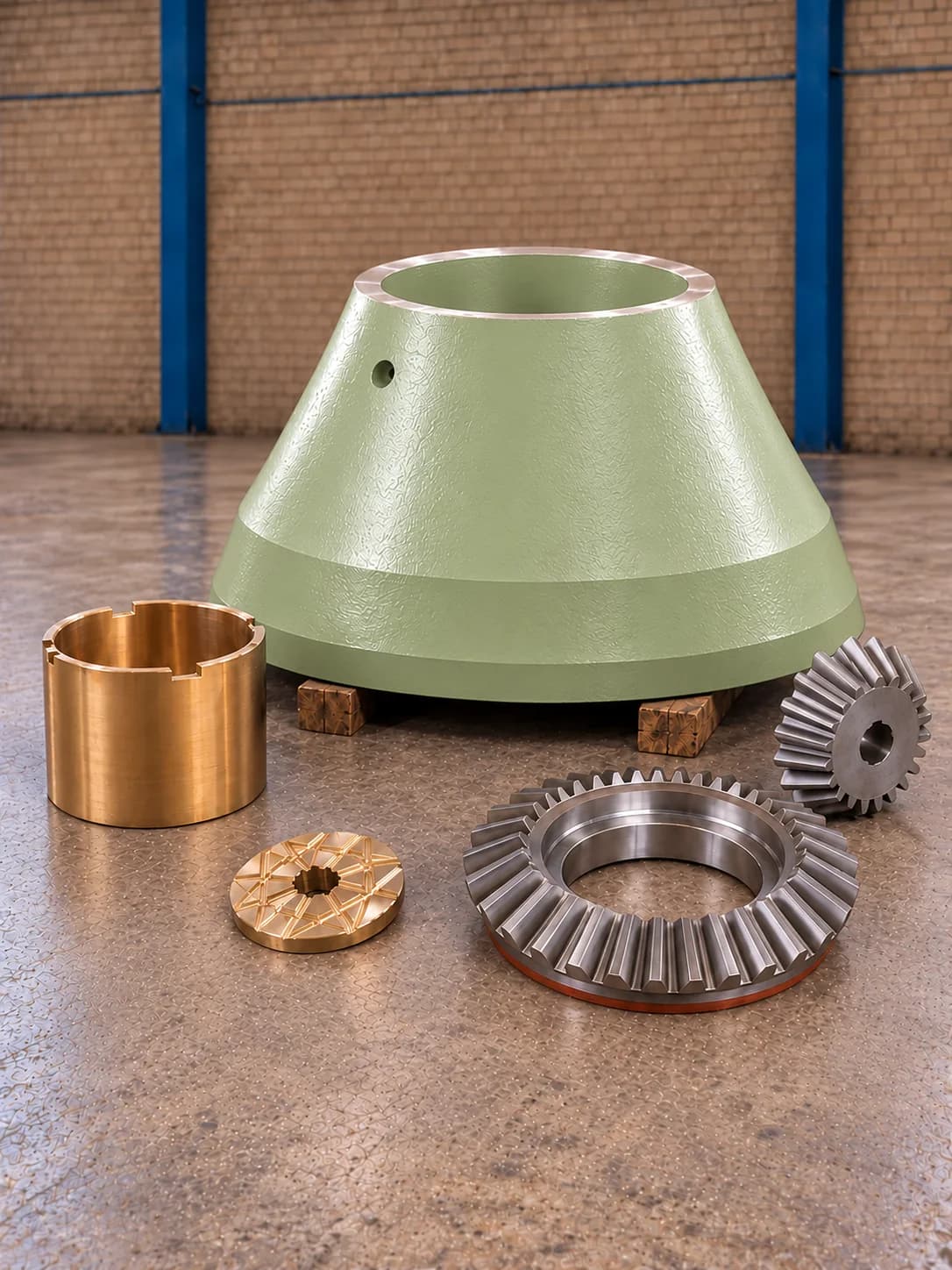
Motors, gearboxes, drums, idlers and bearings need regular inspection. Belt tracking and tension affect operation; worn rollers or accumulated material can interrupt the flow. The supporting structure and walkways must provide access for lubrication, adjustment and component replacement.
- Keep access clear around drive drums and take-up assemblies.
- Position stockpiles so they do not block maintenance routes.
Common questions
What is the difference between a feeder and a conveyor?
A feeder controls the rate delivered to the next machine. A conveyor transports that material along the line. Their duties are different even when both form part of one feeding system.
Why fit a grizzly before the jaw crusher?
Grizzly bars separate material smaller than their openings. If the circuit permits, this fraction can bypass the jaw crusher and leave its capacity available for the larger feed.
Does belt width alone determine capacity?
No. Belt speed, trough shape, inclination, bulk density and loading conditions also determine how much material can be carried.