


Jaw crushers
Jaw crusher
Primary crushing of hard rock for mine and aggregate production.
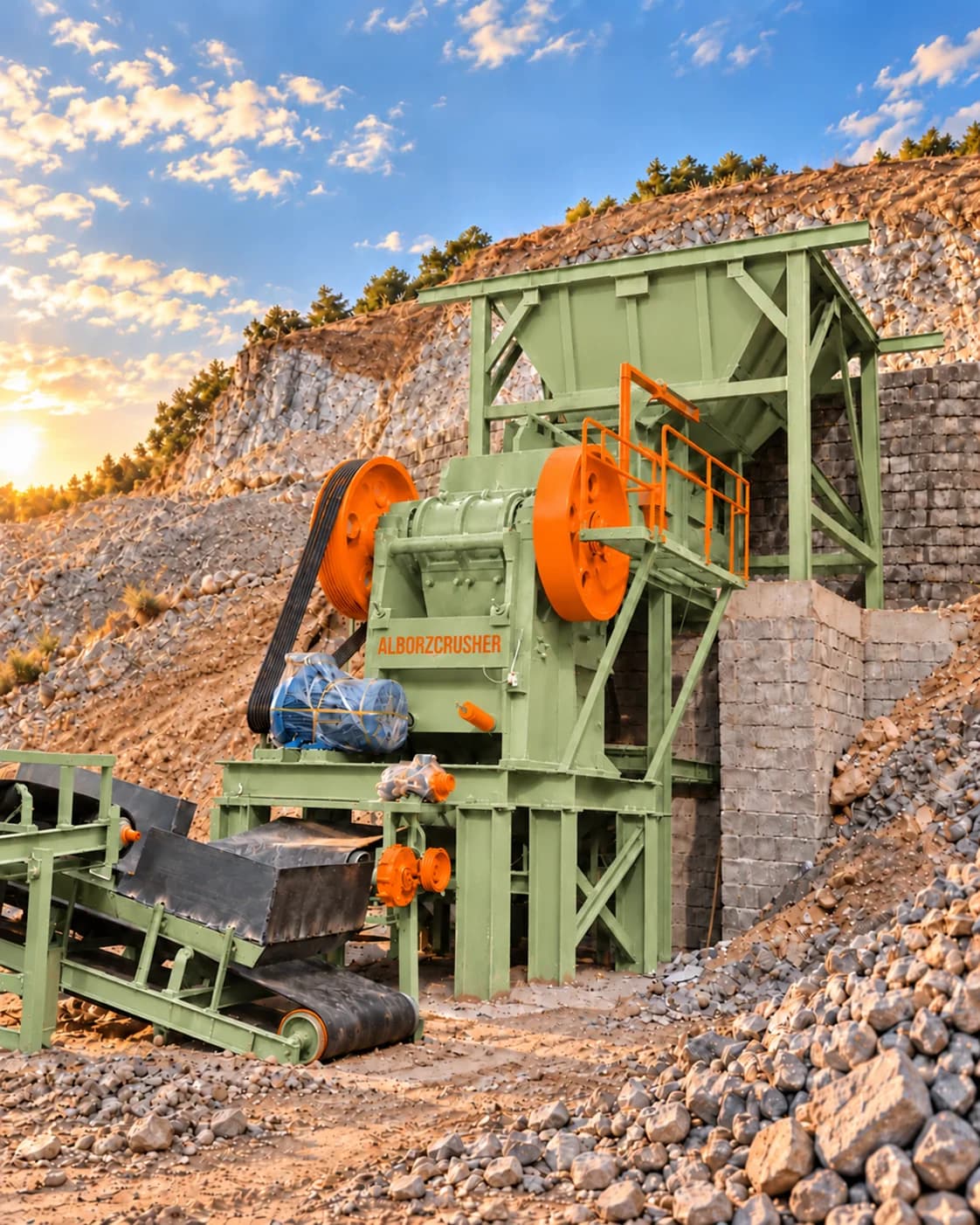
Jaw crushers receive the large feed at the start of a crushing line. The eccentric shaft moves the swing jaw, breaking the rock against the fixed jaw plate. The discharge opening is adjusted for the next crushing stage. Manganese-steel jaw plates, a supported shaft assembly and central lubrication are key parts of the machine.
Request a quotationDesign and operationProduct information
Technical specifications
| Example model | 90x110 |
|---|---|
| Feed opening | 900 × 1100 mm |
| Maximum feed size | 800 mm |
| Production capacity | 150–280 t/h |
| Motor power | 90–110 kW |
| Machine weight | Approx. 32,000 kg |
Capacity and product size depend on the feed material, crushing chamber and machine settings. The quotation specifies the supplied configuration.
Features
- Adjustable discharge setting
- Manganese-steel crushing plates that can be replaced as they wear
- Shaft and bearing assembly for the moving jaw
- Central lubrication of the working assembly
- Access to toggle seats and wear components
Applications
- First-stage crushing in mines and quarries
- Feed preparation for cone crushing
- Reduction of hard, abrasive rock
Operation and components
Primary crushing and wear components
A jaw crusher reduces the run-of-mine feed before secondary crushing. Feed-opening dimensions and the discharge setting define its place in the line.
Feed and discharge openings
The feed opening must accept the largest stone. The discharge setting is adjusted for the downstream crusher; the product still contains several sizes and passes to a screen for separation.
Crushing plates and lubrication
Fixed and moving jaw plates grip the feed and carry the crushing load. Their tooth profile and wear condition affect material movement. Lubrication of the shaft and bearings is part of routine servicing.
| Assembly | Function | Maintenance focus |
|---|---|---|
| Fixed and moving jaw plates | Grip and crush the feed | Tooth wear, mounting and chamber profile |
| Eccentric shaft and bearings | Drive and support the moving jaw | Lubrication and bearing condition |
| Flywheels and belt drive | Transmit power through the crushing cycle | Belt condition and drive alignment |
| Toggle assembly | Transfers load in the jaw mechanism | Contact surfaces, seats and adjustment |
Common questions
Does the jaw crusher produce the final aggregate sizes?
It usually prepares material for further crushing. Final size fractions are separated by a screen; a second crushing stage is added where a smaller product is required.
What determines the required jaw size?
The largest feed pieces, feed grading, rock properties and required throughput. The downstream crusher must also be able to accept the jaw crusher discharge.
Contact
Request a quotation
For equipment enquiries, state the material, feed size, required product grading and capacity. For replacement parts, send the crusher model and the part number, drawing or photograph.
+98 912 560 1126