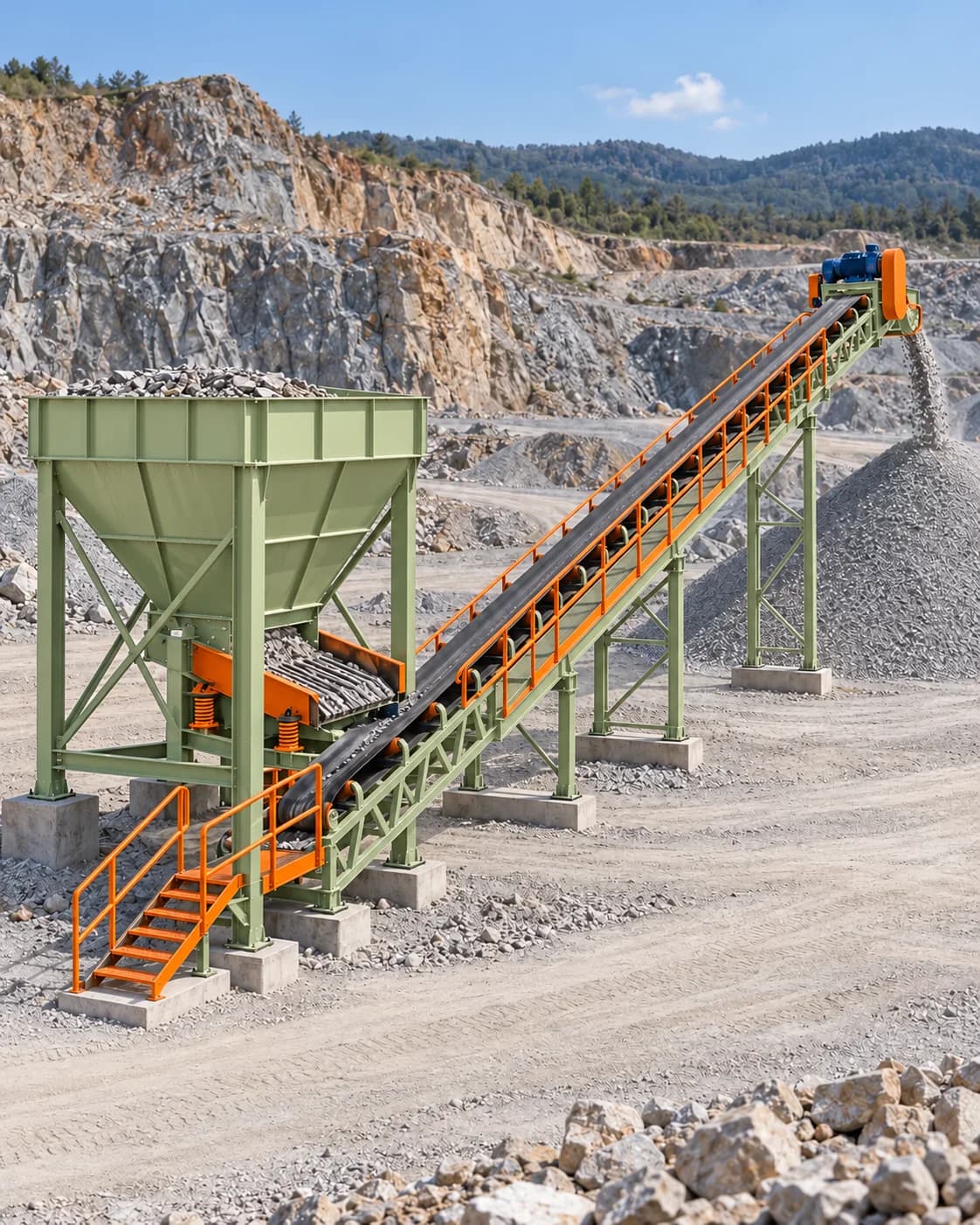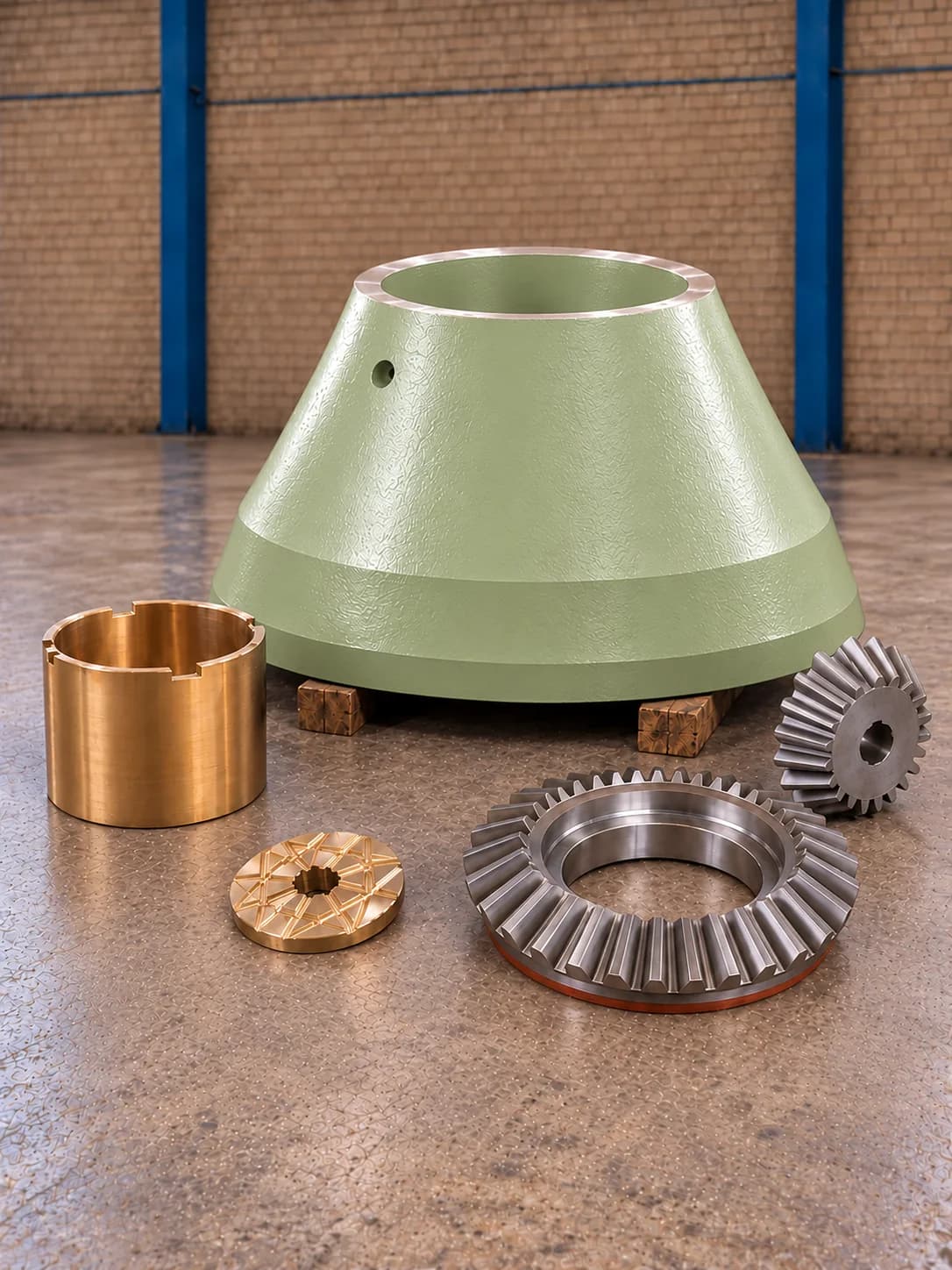


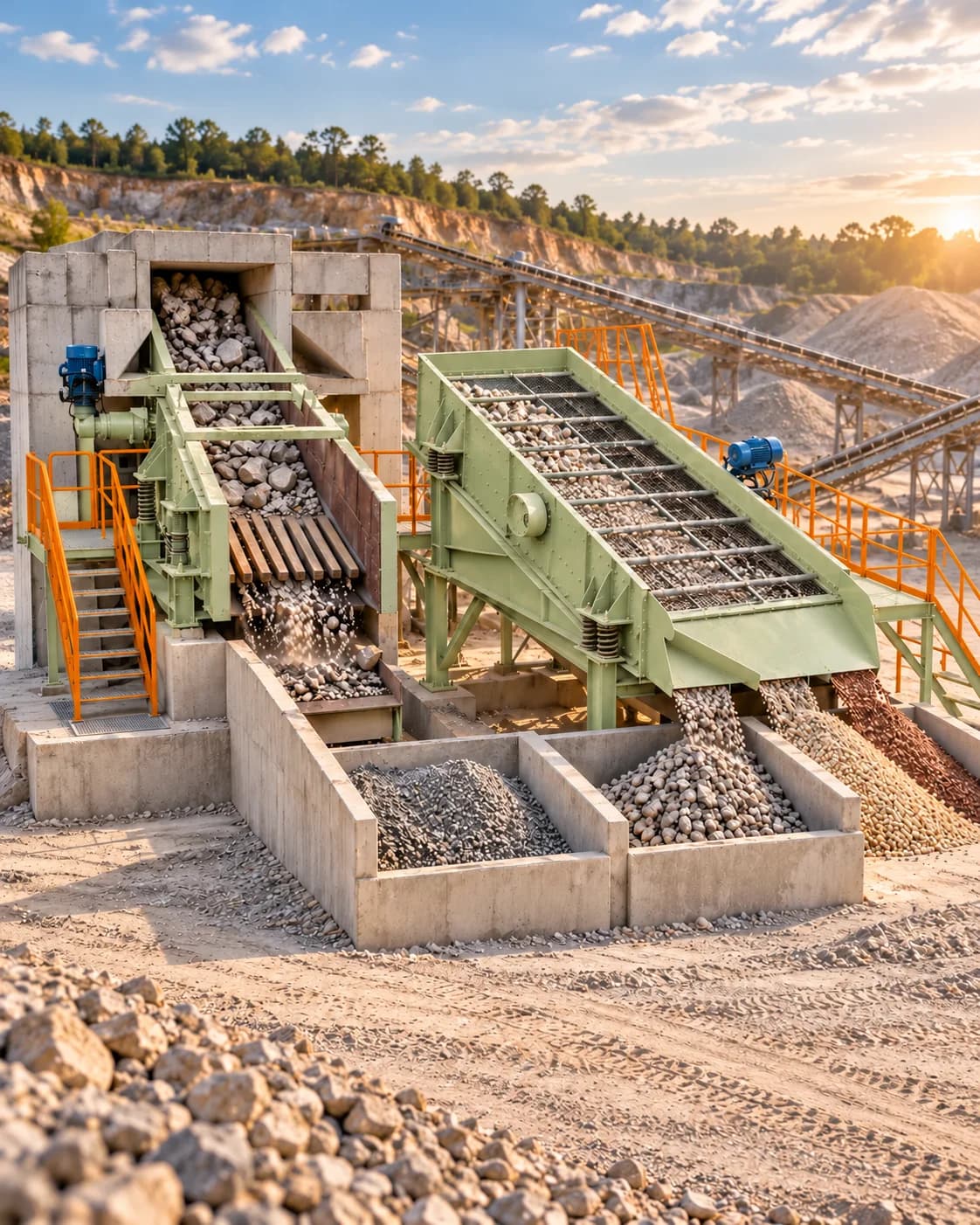
The washing circuit separates unwanted silt and clay from the required sand fraction. Sand washers clean the material, hydrocyclones recover fine solids, and dewatering screens reduce the water carried with the product. A thickener treats the wash water so it can return to the circuit.
01
Spiral and bucket-wheel sand washers
A spiral sand washer moves settled sand along an inclined trough while water carries away suspended fines. A bucket-wheel washer lifts sand from a water bath. The feed grading and the amount of adhering clay determine the washing duty and the arrangement of the equipment.
- Check how much fine sand should remain in the product.
- Allow access to the screw flights, wheel, bearings and drive for inspection and replacement.
02
Hydrocyclones and dewatering screens
The slurry pump feeds the hydrocyclone, where swirling flow separates the solids according to their settling behaviour. The concentrated underflow can pass to a dewatering screen. Vibration advances the sand across the deck while water drains through the screen openings.
- Match the pump and cyclone to the slurry flow and solids load.
- Check the condition of wear liners and screen panels during maintenance.
03
Thickening and water return
In the thickener, suspended solids settle and collect as a concentrated sludge. Clarified water overflows for return to the washing circuit. The installation needs a route for sludge removal, process-water storage and access to pumps and pipework.
- Size the water circuit for the feed and required return-water quality.
- Product moisture and water recovery depend on the material and operating conditions.
Common questions
What is the difference between washing and dewatering?
Washing removes unwanted fines and contaminants from the sand. Dewatering reduces the water carried with the washed product. A line may need both operations.
Where is a hydrocyclone used?
It is used in the slurry circuit to separate and concentrate fine solids. The underflow can feed a dewatering screen, while the overflow passes to the next water-treatment stage.
Does a thickener eliminate the need for fresh water?
No. Clarified water can be reused, but the circuit still needs make-up water to replace losses in the product, sludge and other operating losses.