

Crushing surfaces wear as they work against the rock. The moving assemblies also depend on sound shafts, bearings, bushes and drives. During repair, the replacement part and its mating surfaces must be checked together so the machine can be reassembled correctly.
01
Jaw crusher wear parts and assemblies
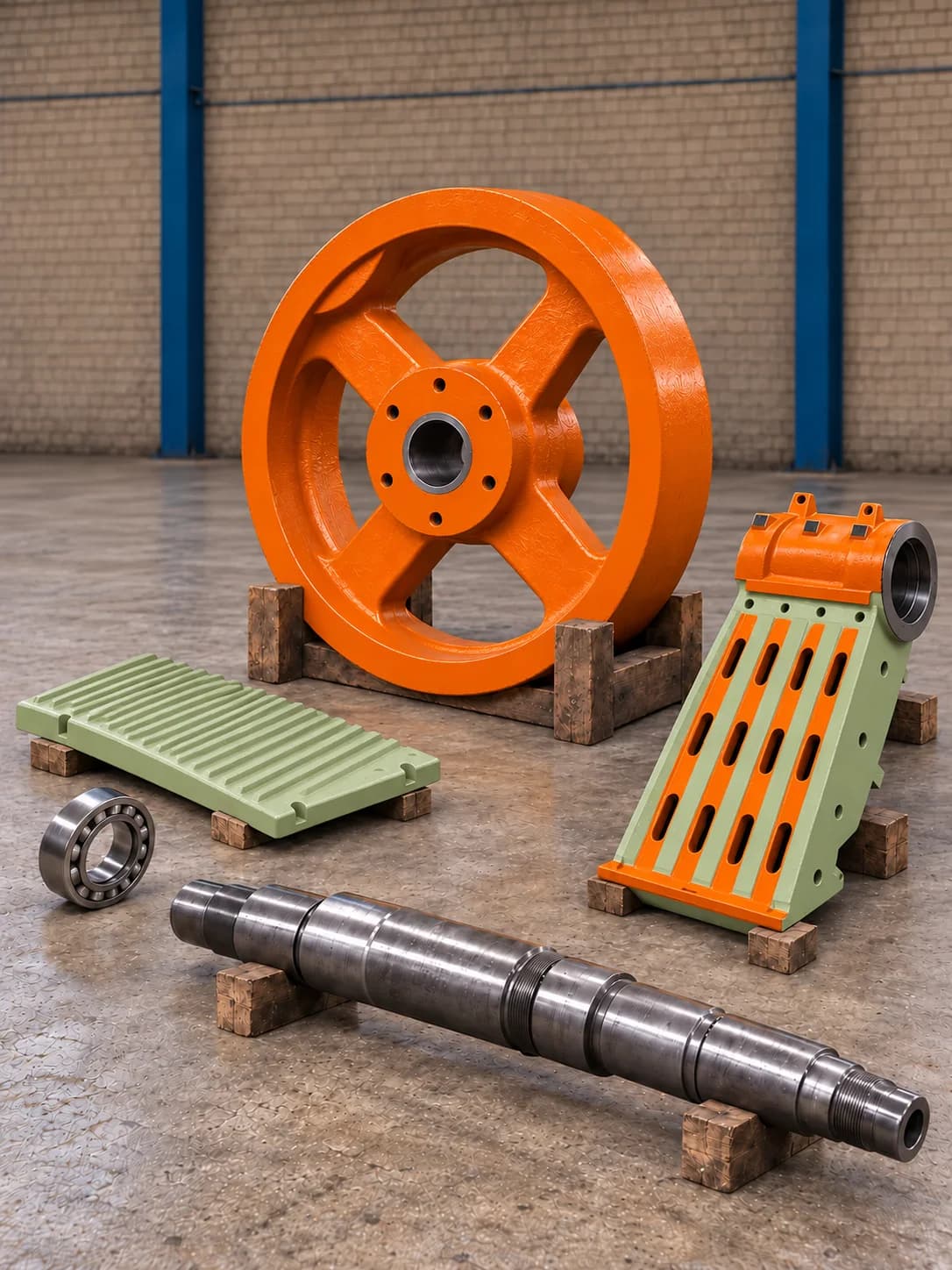
Fixed and moving jaw plates provide the crushing surfaces; cheek plates protect the chamber sides. The eccentric shaft, bearings, flywheels and toggle assembly support the moving jaw. Jaw profile, mounting holes and seating faces must match the machine.
- Inspect the condition of the jaw-plate seats and fasteners.
- Check toggle seats, bearings and shaft surfaces when opening the moving assembly.
02
Cone crusher liners and mechanical parts
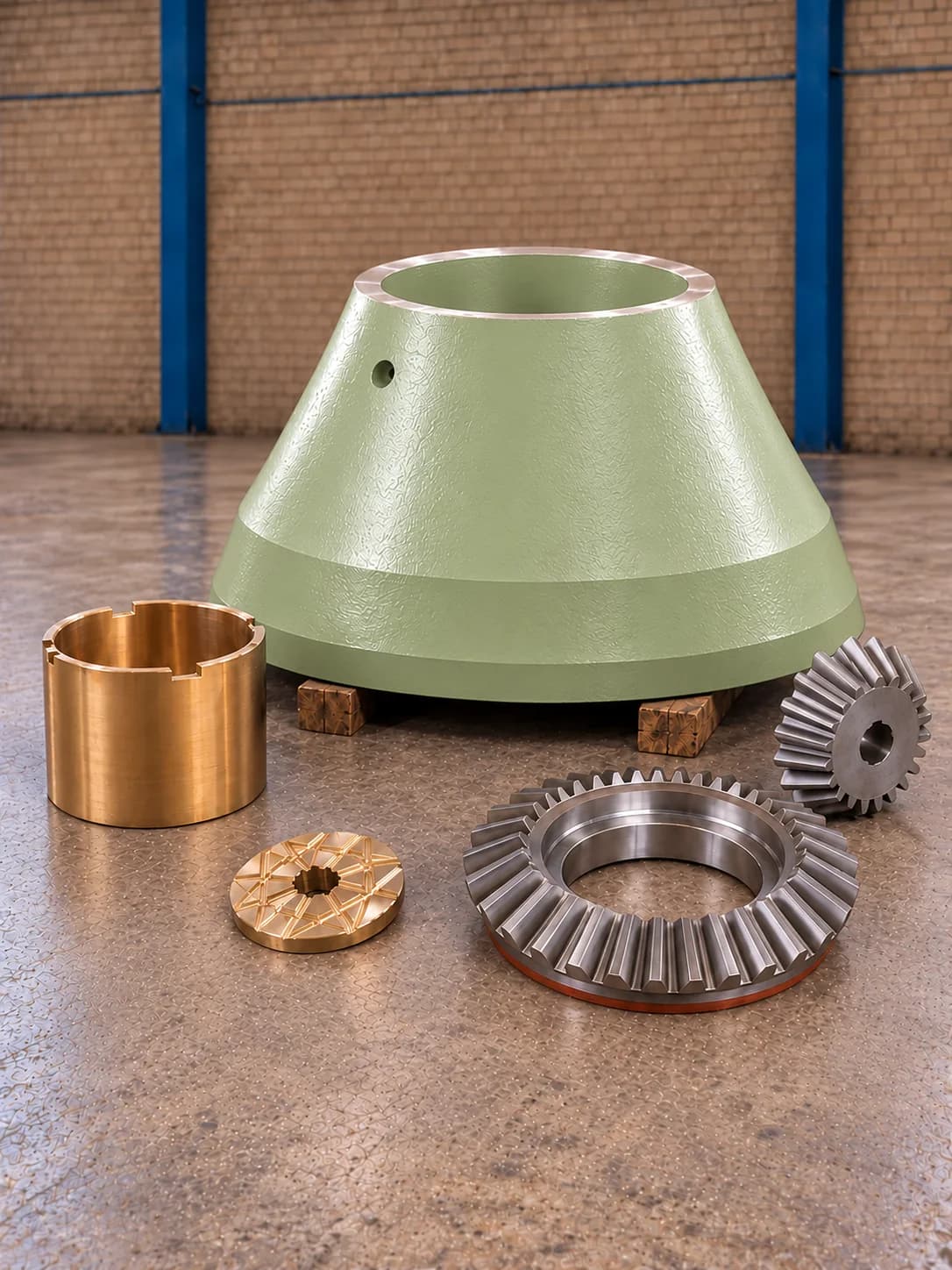
The mantle and concave define the crushing chamber. Their profile and wear condition affect the feed acceptance and discharge setting. Other service components include shafts, bronze bushes, bevel gears and dust seals. Lubrication passages and mating surfaces should be inspected during replacement.
- Identify the fitted chamber and liner profile.
- Check adjoining bushes, seals and gear contact surfaces during repair.
03
Part identification and ordering
A model name helps identify the machine, but a part number or drawing establishes the required component more precisely. Photographs, bore sizes, mounting dimensions and the condition of the worn part help resolve differences between assemblies. For wear parts, include the rock type and wear pattern.
- Send a clear view of the complete part and its mounting details.
- State the quantity needed and whether the machine is stopped for repair.
Common questions
Is the machine model enough to order a part?
It is a starting point. Chambers, fitting dimensions and assembly revisions can differ, so a part number, drawing or checked dimensions are needed to confirm the replacement.
Can I enquire without a part number?
Yes. Send the machine details, clear photographs and the dimensions available. The mounting and mating surfaces are particularly useful for identifying the part.
When should wear parts be inspected?
Inspect them at scheduled stops and when grading, throughput or the wear pattern changes. Check remaining thickness and mounting condition against the machine maintenance instructions.